Top 8
Best swimming lakes in Arizona
Lake Havasu, Lake Powell and Lake Mead lead our list of the best lakes for swimming in Arizona. It ranks all 8 that qualify by their beaches and swim areas, how clear the water is, and the parks and campgrounds beside them. Every lake links to its swimming page, with the water temperature, the latest algae readings and any advisory in effect.
-
Lake Havasu
Arizona 3.2 ft below full today
- 15 beaches and swim areas
- Very clear water (you can see about 24 ft down)
- 7 parks on the shore
- 9 campgrounds
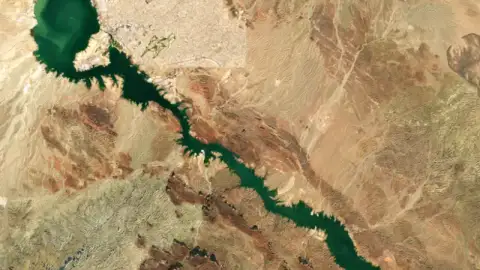
Lake Havasu is the reservoir behind Parker Dam on the Colorado River, on the line between Mohave County, Arizona, and San Bernardino County, California.
-
Lake Powell
On the Utah line 159.8 ft below full today
- 3 beaches and swim areas
- Very clear water (you can see about 14 ft down)
- 3 parks on the shore
- 14 campgrounds
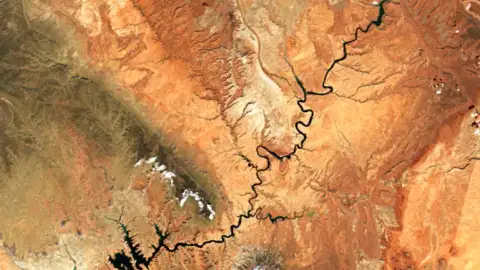
Lake Powell is the reservoir behind Glen Canyon Dam on the Colorado River, a long, branching lake that starts at Page, Arizona, and reaches deep into the canyon country of southern Utah.
-
Lake Mead
On the Nevada line 187.7 ft below full today
- 6 beaches and swim areas
- 3 parks on the shore
- 5 campgrounds
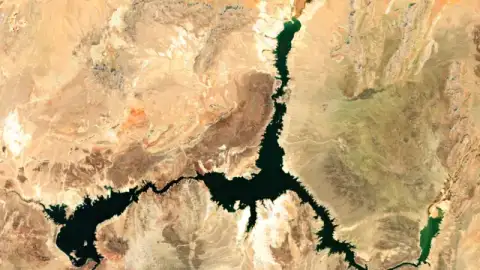
Lake Mead is the reservoir behind Hoover Dam, filling the canyons of the Colorado River where Nevada meets Arizona, about 24 miles east of Las Vegas.
-
Lake Mohave
Mohave County 7.3 ft below full today
- 5 beaches and swim areas
- 3 parks on the shore
- 6 campgrounds
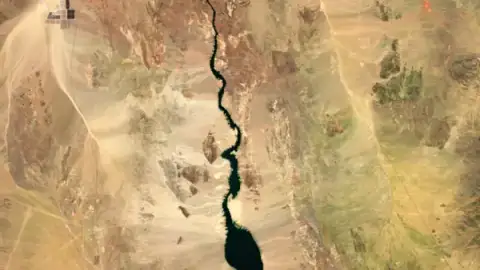
Lake Mohave is the stretch of the Colorado River held back by Davis Dam, running 67 miles south from the foot of Hoover Dam along the Arizona and Nevada line. It lies inside Lake Mead National Recreation Area, run by the National Park Service.
-
Canyon Lake
Maricopa County 29% full today
- 2 beaches and swim areas
- 1 park on the shore
Canyon Lake is the smallest of the four Salt River Project reservoirs on the Salt River, a narrow lake that winds through a desert canyon in the Tonto National Forest, about 15 miles up the Apache Trail from Apache Junction.
-
Saguaro Lake
Maricopa County 98% full today
- 1 beach or swim area
Saguaro Lake is the last of the four reservoirs built on the Salt River, held back by Stewart Mountain Dam in the Tonto National Forest about 41 miles northeast of downtown Phoenix. It is a narrow desert lake between canyon walls, and one of the most popular recreation spots in the national forest.
-
Bartlett Lake
Maricopa County 6.9 ft below full today
- 1 beach or swim area
Bartlett Lake is a long desert reservoir on the Verde River in the Tonto National Forest, about 17 miles past Carefree and less than an hour's drive from downtown Phoenix. Salt River Project runs the dam and the water, and the Forest Service runs the shoreline.
How this list is made
Lakes are ranked by the number of beaches and designated swim areas on their shore, the clarity of the water in summer (Secchi depth measured by state agencies and volunteers, where there are readings), the parks and campgrounds beside them and how much people look them up. A lake needs at least one beach or swim area to be listed. Nothing here is paid for.
The order comes from our data, not from anyone's opinion or payment, and it changes as the data does. A lake we have little data for can rank lower than it deserves: tell us through the contact form if something is missing.
What is the best lake for swimming in Arizona?
By what our data shows, Lake Havasu comes first, with 15 beaches and swim areas and water you can see about 24.2 feet into. Lake Powell and Lake Mead follow.
Which lake in this list has the clearest water?
Lake Havasu: in summer a white disk lowered into the water stays visible to about 24.2 feet (the median of the readings of state agencies and volunteer monitors).
Is it safe to swim in a lake?
Usually, with care. Swim at marked beaches, never alone, and wear a life jacket away from shore: lake water is murky, drops off quickly and is colder below the surface. Stay out of water with a green scum or paint-like streaks (a blue-green algae bloom) and of posted advisories; each lake page shows the latest algae reading and official advisories. In spring, when the air is warm and the water is still cold, cold water shock is the main danger.
How is this list made?
Lakes are ranked by the number of beaches and designated swim areas on their shore, the clarity of the water in summer (Secchi depth measured by state agencies and volunteers, where there are readings), the parks and campgrounds beside them and how much people look them up. A lake needs at least one beach or swim area to be listed. Nothing here is paid for.