Guide · updated November 17, 2026
Best Water Temperature for Fishing: A Chart for 49 Fish
The water temperatures at which 49 freshwater fish feed most and spawn, from walleye and trout to bass, crappie and catfish, on one chart.
- Cisco 42–55°F · spawns 34–43°F in fall
- Lake Whitefish 42–56°F · spawns 36–45°F in fall
- Lake Trout 45–55°F · spawns 48–55°F in fall
- Kokanee 48–55°F · spawns 42–55°F in fall
- Chinook Salmon 48–58°F · spawns 42–55°F in fall
- Coho Salmon 48–58°F · spawns 42–55°F in fall
- Mountain Whitefish 48–62°F · spawns 36–45°F in fall
- Brook Trout 50–60°F · spawns 40–49°F in fall
- Cutthroat Trout 50–60°F · spawns 42–55°F
- Atlantic Salmon 48–62°F · spawns 43–50°F in fall
- Paddlefish Filter feeder · spawns 50–60°F
- Rainbow Trout 50–62°F · spawns 50–60°F
- Brown Trout 52–65°F · spawns 44–50°F in fall
- Northern Pike 50–70°F · spawns 36–48°F
- Striped Bass 55–68°F · spawns 60–68°F
- Sauger 55–70°F · spawns 40–50°F
- Walleye 55–70°F · spawns 42–50°F
- Chain Pickerel 55–75°F · spawns 47–52°F
- Yellow Perch 60–72°F · spawns 45–52°F
- Muskellunge 60–75°F · spawns 49–59°F
- White Bass 60–75°F · spawns 54–64°F
- Crappie 60–75°F · spawns 56–65°F
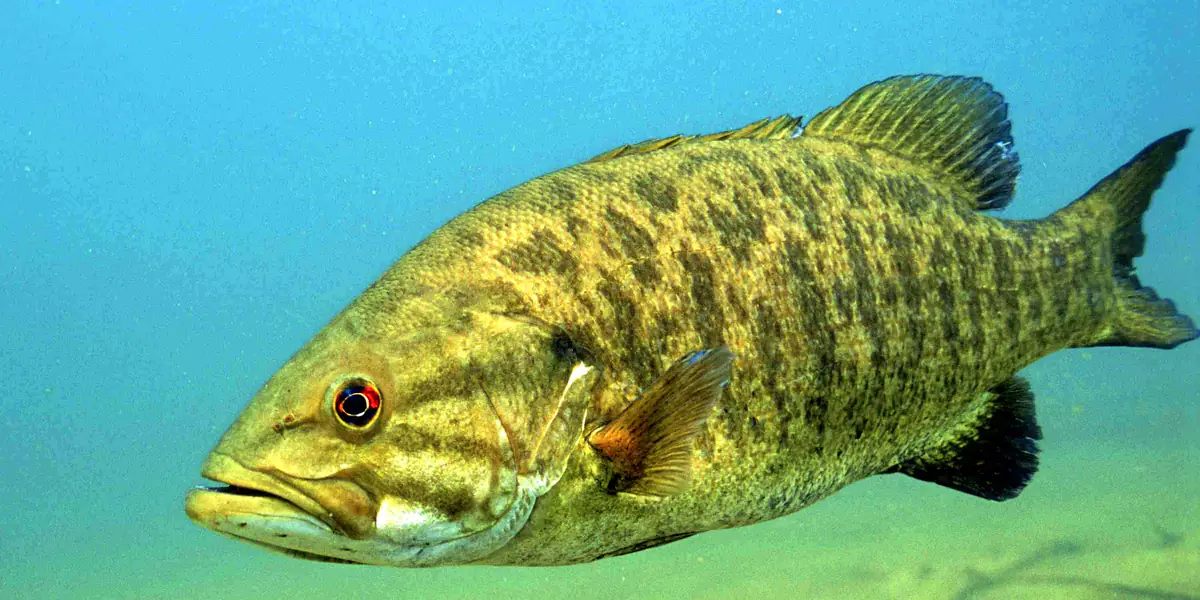
- Smallmouth Bass 60–75°F · spawns 58–65°F
- Hybrid Striped Bass 60–75°F · spawns 60–68°F
- Spotted Bass 62–78°F · spawns 58–66°F
- Alabama Bass 62–78°F · spawns 58–66°F
- Guadalupe Bass 62–78°F · spawns 60–70°F
- Rock Bass 62–78°F · spawns 60–72°F
- White Perch 65–80°F · spawns 52–60°F
- Largemouth Bass 65–80°F · spawns 60–75°F
- Yellow Bass 65–80°F · spawns 60–70°F
- Freshwater Drum 65–80°F · spawns 65–75°F
- Common Carp 65–82°F · spawns 63–79°F
- Pumpkinseed 68–80°F · spawns 63–78°F
- Redear Sunfish 68–80°F · spawns 66–75°F
- Florida Bass 68–82°F · spawns 60–75°F
- Brown Bullhead 68–82°F · spawns 65–75°F
- Redbreast Sunfish 68–82°F · spawns 65–78°F
- Bluegill 70–80°F · spawns 67–80°F
- Black Bullhead 68–82°F · spawns 68–75°F
- Yellow Bullhead 70–82°F · spawns 70–78°F
- Longear Sunfish 70–82°F · spawns 70–82°F
- Bowfin 68–85°F · spawns 61–66°F
- Catfish 70–85°F · spawns 70–84°F
- Green Sunfish 70–85°F · spawns 70–82°F
- Warmouth 70–85°F · spawns 70–80°F
- Longnose Gar 72–88°F · spawns 65–72°F
- Spotted Gar 72–88°F · spawns 68–79°F
- Alligator Gar 72–88°F · spawns 68–80°F
How to read the chart
Each fish has two bars. The blue bar is the range of water temperature in which it feeds most actively. The orange bar is the range in which it spawns; a dashed orange bar marks the trout, salmon and kokanee that spawn in fall, as the water cools. Fish are sorted from the coldest-water species at the top to the warmest at the bottom, and each name links to the page for that fish, with the lakes where it lives. The paddlefish has only a spawning bar: it strains plankton from the water and does not take a bait, so it is caught by snagging in the seasons each state sets.
The ranges are rules of thumb from state fish and wildlife agencies’ species profiles, Ontario’s freshwater fish life-history database and FishBase. They are not hard limits: a bass will still bite in 55 °F water, only less often and more slowly.
Why water temperature matters so much
Fish are cold-blooded. Their body is the temperature of the water around them, so the water sets how fast they digest, how often they need to eat and how far they will chase a bait. Each species has a band where everything works best, and that is where it feeds hardest.
Outside that band fish still eat, but they change where they live:
- Too warm: they drop deeper, move to shade, current or springs, and feed at dawn, dusk and night.
- Too cold: they slow down and hold near the bottom; on a sunny spring afternoon, the shallow, dark-bottomed coves that warm first draw them up.
The spawn follows the thermometer
The calendar only matters because of what it does to the water. In spring the order is about the same on every lake: northern pike and walleye first, in the 40s °F soon after the ice goes out; then yellow perch and crappie; then bass in the 60s; and bluegill, redear and catfish last, as the water nears 70 °F and beyond. Trout, salmon and kokanee do it the other way round, in fall.
A warm spring can move every spawn weeks earlier, and a cold one can hold it back. That is why each lake page on Lake by Lake builds its spawning calendar from the lake’s latitude and elevation, and why it is worth checking the water temperature itself before a trip.
The surface is not the whole lake
In summer, deep lakes stratify: a warm layer sits on top of cold, dark water, with a band of fast-changing temperature between them, the thermocline. Surface water at 82 °F can sit above water in the 50s. Trout and stripers go down to the cool water; many other fish hold near the thermocline, where it is cooler than the surface but still has oxygen. In fall the lake turns over and the layers mix again. Lake turnover and the thermocline explains how it works.
Where to check the temperature
Every lake page with a reading shows the water temperature today and its trend. It comes from the lake’s own sensor where there is one, and otherwise from the latest clear satellite pass (Landsat, MODIS or, for the Great Lakes, NOAA’s daily analysis). Satellites see only the top layer of open water, so coves and the shoreline are often a few degrees warmer in spring and cooler in fall. For a quick look across the country, see the warmest lakes today.
Questions
What is the best water temperature for bass fishing?
Largemouth bass feed hardest with the water between about 65 and 80 °F, and smallmouth between about 60 and 75 °F. Largemouth move shallow to spawn once the water reaches about 60 °F, smallmouth a little cooler, from about 58 °F.
At what water temperature do crappie spawn?
Usually between about 56 and 65 °F. In the South that is February and March, in the middle of the country March and April, and in the North May and June. The shallow coves on the sunny side of a lake reach it first.
Do fish bite when the water is cold?
Yes, but slower. Fish are cold-blooded, so in cold water they digest slowly and feed less often. Walleye, pike, yellow perch and trout keep feeding in cold water — that is what makes ice fishing work — while bass, bluegill and catfish slow right down.
Is the water temperature at the surface the same as at depth?
Not in summer. Many lakes split into a warm top layer and a much colder bottom layer, with a sharp change between them called the thermocline. Surface readings, including satellite ones, tell you about the top layer only.