Guide · updated November 15, 2026
Boat Launch Checklist (Printable)
What to check at home, on the trailer, in the staging area and on the ramp so the launch takes two minutes — drain plug included. Printable.
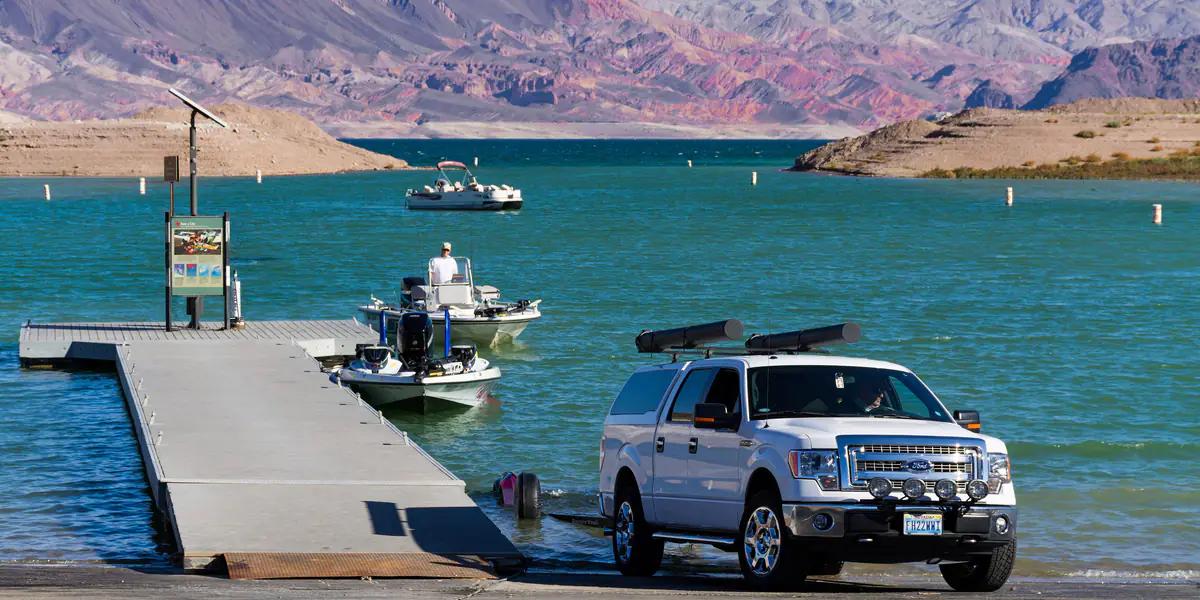
Most launch-day problems — a missing plug, a dead battery, a ramp out of the water — are caught by a two-minute check. Tick the boxes as you go (they stay ticked in this browser) or print the list for the truck.
At home, the day before
- Check the lake level and whether your ramp is usable at it (see launching at low water)
- Check the forecast: wind, thunderstorms and small-craft advisories
- Registration papers and the boat’s numbers and sticker are current
- Boating education card, if your state requires one
- Fishing license, if you will fish
- Battery charged; fuel topped up with fresh fuel
- Life jackets: one wearable per person, the right sizes, in good shape
- Throwable cushion or ring (boats 16 feet and longer)
- Fire extinguisher charged and in reach
- Horn or whistle, and navigation lights that work
- Kill-switch lanyard or wireless fob
- Leave a float plan with someone: where you launch, who is on board, when you will be back
Trailer, before you tow
- Hitch latched and pinned, safety chains crossed under the tongue
- Trailer lights working: brakes, turn signals, running lights
- Tire pressure on the trailer, including the spare
- Wheel bearings greased; not hot to the touch at the first stop
- Transom straps and winch strap tight; motor support in place
- Nothing loose in the boat that can blow out on the highway
In the staging area, not on the ramp
- Drain plug in — check it by hand
- Remove transom straps and the motor support; keep the winch strap on
- Load gear, coolers and life jackets into the boat
- Attach bow and stern lines and put out the fenders
- Disconnect the trailer lights if they are not waterproof
- Raise the motor (trim up) so the skeg clears the ramp
- Check the bilge pump and blower work; run the blower before starting an inboard
On the ramp
- Back down slowly, with a spotter if you have one
- Stop when the boat floats; unhook the winch strap and launch
- Hold the boat by its line at the courtesy dock, not at the ramp
- Pull out and park the truck and trailer promptly
- Lower the motor, start it and let it warm up before leaving the dock
Before you leave the lake
- Pull the drain plug and drain the bilge, livewells and ballast
- Remove plants, mud and mussels from the hull, trailer and anchor — clean, drain, dry
- Stop at the inspection station if the state or the lake runs one
- Re-strap the boat and reconnect the trailer lights before the highway
Questions
What is the most forgotten thing when launching a boat?
The drain plug. Put it in at the staging area, before the boat goes near the water, and make it a habit to check it with your hand rather than by eye. Many boaters keep the plug on the key ring or tie it to the steering wheel when it is out.
What safety gear do I need on a boat on a lake?
Under federal rules, a U.S. Coast Guard–approved wearable life jacket for each person, a throwable flotation device on boats 16 feet and longer, a sound signal such as a horn or whistle, navigation lights for use between sunset and sunrise, and a fire extinguisher on most motorboats. States add their own rules, such as boating education cards and kill-switch lanyards; check the state's boating handbook.
What does "clean, drain, dry" mean?
Before leaving a lake, remove all plants, mud and animals from the boat, trailer and gear; drain the bilge, livewells, ballast tanks and motor; and let everything dry before launching on another lake. Zebra and quagga mussels, and plants such as hydrilla, travel from lake to lake this way. Many western states run mandatory inspection stations.
How long should a boat launch take?
The time on the ramp itself should be a minute or two. Everything else — straps, plug, gear, lines — is done in the staging area or the parking lot, so the ramp stays free for the next boat.