Top 13
Best swimming lakes in Oklahoma
Lake Texoma, Lake Eufaula and Broken Bow Lake lead our list of the best lakes for swimming in Oklahoma. It ranks all 13 that qualify by their beaches and swim areas, how clear the water is, and the parks and campgrounds beside them. Every lake links to its swimming page, with the water temperature, the latest algae readings and any advisory in effect.
-
Lake Texoma
On the Texas line 100% full today
- 13 beaches and swim areas
- Murky water (you can see about 3.6 ft down)
- 15 parks on the shore
- 66 campgrounds
Lake Texoma is the big Corps of Engineers reservoir on the Red River, straddling the line between Texas and Oklahoma with about two-thirds of its water on the Oklahoma side.
-
Lake Eufaula
McIntosh County 3.8 ft below full today
- 5 beaches and swim areas
- 12 parks on the shore
- 30 campgrounds
S. Army Corps of Engineers reservoir on the Canadian River in eastern Oklahoma, lying mostly in McIntosh and Pittsburg counties with smaller reaches in Haskell and Okmulgee counties. It holds more water than any other lake in Oklahoma, which earned it the nickname the gentle giant.
-
Broken Bow Lake
McCurtain County 10.1 ft below full today
- 2 beaches and swim areas
- Clear water (you can see about 8.5 ft down)
- 7 parks on the shore
- 1 campground
Broken Bow Lake is an Army Corps of Engineers reservoir on the Mountain Fork River in McCurtain County, in the far southeastern corner of Oklahoma, about 9 miles northeast of the town of Broken Bow.
-
Fort Gibson Lake
Cherokee County 0.9 ft below full today
- 2 beaches and swim areas
- Murky water (you can see about 2.1 ft down)
- 9 parks on the shore
- 21 campgrounds
-
Grand Lake o' the Cherokees
Mayes County At full pool today
- 1 beach or swim area
- Murky water (you can see about 3.0 ft down)
- 4 parks on the shore
- 41 campgrounds
Grand Lake o' the Cherokees, known to almost everyone as Grand Lake, is a reservoir on the Grand River, also known as the Neosho, in the hills of the state's northeast corner.
-
Tenkiller Lake
Sequoyah County 7.0 ft below full today
- 1 beach or swim area
- Fairly clear water (you can see about 4.7 ft down)
- 8 parks on the shore
- 16 campgrounds
-
Lake Hefner
Oklahoma County 0.4 ft above full today
- 1 beach or swim area
- Murky water (you can see about 2.3 ft down)
- 10 parks on the shore
Lake Hefner is a city-owned drinking water reservoir inside northwest Oklahoma City, ringed by NW Grand Boulevard, Hefner Road, the Hefner Parkway and MacArthur Avenue.
-
Skiatook Lake
Osage County 3.6 ft below full today
- 1 beach or swim area
- Fairly clear water (you can see about 6.9 ft down)
- 2 parks on the shore
- 7 campgrounds
-
Lake Thunderbird
Cleveland County 1.9 ft below full today
- 2 beaches and swim areas
- Murky water (you can see about 1.7 ft down)
- 6 parks on the shore
- 5 campgrounds
-
Keystone Lake
Tulsa County 0.8 ft below full today
- 1 beach or swim area
- 5 parks on the shore
- 18 campgrounds
Keystone Lake is the Corps of Engineers reservoir on the Arkansas and Cimarron rivers about 15 miles west of Tulsa, reaching into Osage, Pawnee, Creek and Tulsa counties. Being so close to the city, it gets heavy fishing pressure, mostly for striped bass, white bass, crappie and catfish.
-
Foss Reservoir
Custer County 4.4 ft below full today
- 2 beaches and swim areas
- Murky water (you can see about 3.9 ft down)
- 1 campground
Foss Reservoir, usually called Foss Lake, is the big lake on the Washita River in western Oklahoma, in Custer County west of Clinton and within a few miles of Interstate 40 and old Route 66.
-
Kaw Lake
Osage County 0.9 ft above full today
- 1 beach or swim area
- Murky water (you can see about 2.1 ft down)
- 1 park on the shore
- 14 campgrounds
-
Great Salt Plains Lake
Alfalfa County 0.3 ft below full today
- 1 beach or swim area
- 1 park on the shore
- 1 campground
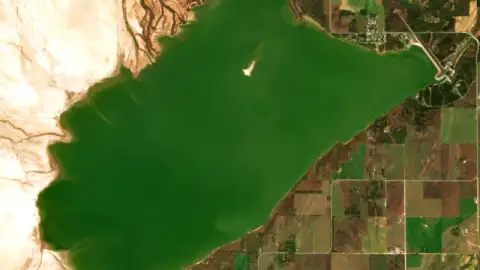
How this list is made
Lakes are ranked by the number of beaches and designated swim areas on their shore, the clarity of the water in summer (Secchi depth measured by state agencies and volunteers, where there are readings), the parks and campgrounds beside them and how much people look them up. A lake needs at least one beach or swim area to be listed. Nothing here is paid for.
The order comes from our data, not from anyone's opinion or payment, and it changes as the data does. A lake we have little data for can rank lower than it deserves: tell us through the contact form if something is missing.
What is the best lake for swimming in Oklahoma?
By what our data shows, Lake Texoma comes first, with 13 beaches and swim areas and water you can see about 3.6 feet into. Lake Eufaula and Broken Bow Lake follow.
Which lake in this list has the clearest water?
Broken Bow Lake: in summer a white disk lowered into the water stays visible to about 8.5 feet (the median of the readings of state agencies and volunteer monitors).
Is it safe to swim in a lake?
Usually, with care. Swim at marked beaches, never alone, and wear a life jacket away from shore: lake water is murky, drops off quickly and is colder below the surface. Stay out of water with a green scum or paint-like streaks (a blue-green algae bloom) and of posted advisories; each lake page shows the latest algae reading and official advisories. In spring, when the air is warm and the water is still cold, cold water shock is the main danger.
How is this list made?
Lakes are ranked by the number of beaches and designated swim areas on their shore, the clarity of the water in summer (Secchi depth measured by state agencies and volunteers, where there are readings), the parks and campgrounds beside them and how much people look them up. A lake needs at least one beach or swim area to be listed. Nothing here is paid for.