Guide · updated November 17, 2026
Cold Water Shock: Why Spring Lakes Are So Dangerous
What happens in the first minutes after a fall into cold water, why the water, not the air, sets the danger, and how a life jacket keeps you alive.
On a warm day in April or May the air can be in the 70s while the lake is still in the 40s or 50s. That gap catches people every spring: anglers in small boats, paddlers, the first swimmers of the year. A fall into cold water is dangerous long before anyone gets hypothermia.
The first minutes: the gasp
Sudden cold on the skin sets off a gasp reflex, then a few minutes of fast, uncontrolled breathing. If your head is under water at that moment, you breathe water in. Heart rate and blood pressure jump at the same time. The National Weather Service says this cold shock lasts for the first two to three minutes or more, that it can start in water as warm as 77 °F, and that at 50 to 60 °F it can be as severe as in water near freezing.
Then the arms and legs give out
As the cold reaches the muscles and nerves of the arms and legs, they lose strength and coordination. People who could easily swim to shore in summer find they cannot keep their head up, grab a line or climb back into the boat. This is why so many cold-water drownings happen close to a boat or the bank, and why the plan should never be to swim for it in cold water unless shore is very close.
Hypothermia comes later
Hypothermia begins when the body’s core drops to 95 °F, and in a life jacket that takes much longer than most people think. The life jacket is what buys that time: it keeps your head out of the water through the gasping and after your arms stop working.
When the danger is highest
- Spring, after ice-out and through the first warm weeks, when the air warms long before the water.
- Late fall, for hunters and anglers in small boats.
- Deep, cold lakes all summer: big northern and mountain lakes can stay cold below a thin warm surface layer.
- Below dams, where the river is fed by cold water from the bottom of the lake.
Check the water, not the air. Every lake page on Lake by Lake with a reading shows the water temperature today; dress for that number.
If you fall in
- Don’t fight the gasp. Keep your head out of the water and get your breathing under control first; it settles within a few minutes.
- Get out, or up. Climb onto the boat, a dock or anything floating, and keep as much of your body out of the water as you can.
- If you can’t get out, keep still. Hold your knees to your chest with your arms against your sides (the H.E.L.P. position), or huddle with the others in the water, to save heat while you wait for help.
- Swim only if safety is close and you can do it calmly.
After the rescue
Call 911. Watch the person’s breathing and start CPR if it stops. Remove wet clothing and warm them slowly, starting with the chest and belly. Don’t put them in a warm bath or shower: warming too fast can cause dangerous heart rhythms.
The one thing that works
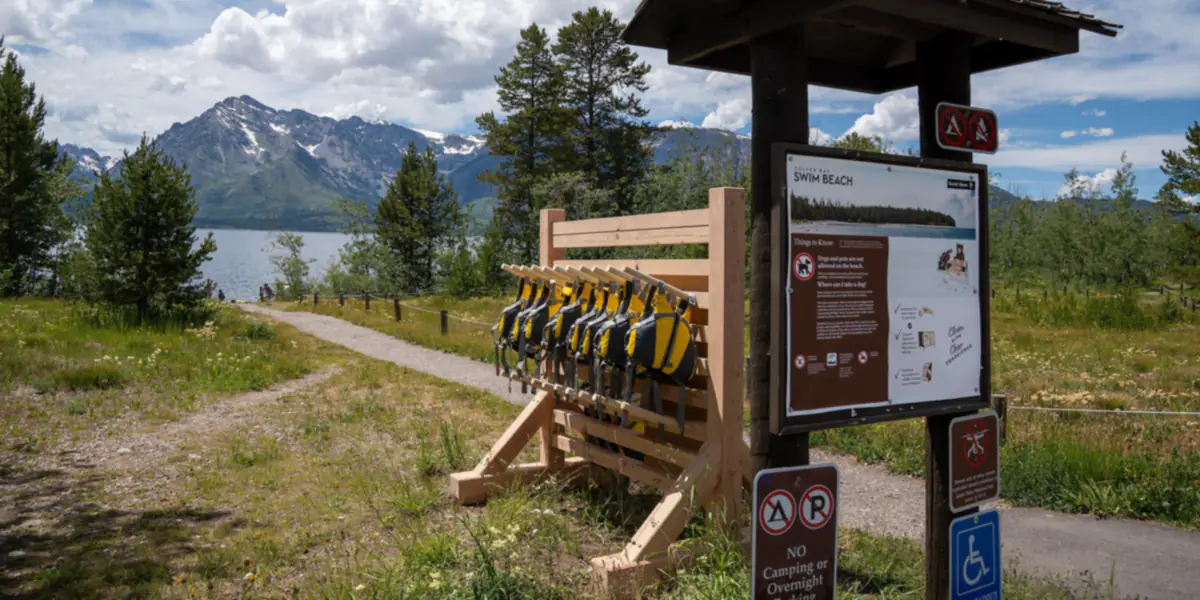
Wear the life jacket, buckled, in the boat, kayak or paddleboard, not stowed under a seat. In cold water you will not have the time or the hands to put it on. Many lakes have free life jacket loaner stations at their ramps and beaches. For long trips on cold water, a wetsuit or drysuit buys more time still.
Questions
What water temperature causes cold water shock?
According to the National Weather Service, the gasping and fast breathing of cold shock can start in water as warm as 77 °F, and cold shock in water of 50 to 60 °F can be as severe as in water near freezing. Most lakes are in that range for weeks after the air has turned warm.
Why is cold water dangerous even for good swimmers?
Because the first danger is not hypothermia but breathing. The gasp reflex can pull in water before you surface, the fast breathing that follows makes swimming hard, and cold arms and legs lose strength within minutes. Swimming ability does little against any of that; a life jacket keeps your head up through all of it.
What should I do if I fall into cold water?
Keep your head out of the water and get your breathing under control before doing anything else. Then get out, or onto the boat or anything floating, as fast as you can. If you cannot get out, keep still in the H.E.L.P. position — knees to chest, arms against your sides — or huddle with others, and wait for rescue.
Should I put someone with hypothermia in a warm bath?
No. The National Weather Service advises calling 911, removing wet clothing and warming the person slowly, starting with the trunk. Putting them in warm water can trigger dangerous heart rhythms.