Guide · updated November 17, 2026
Swimmer’s Itch: What Causes It and How to Avoid It
The itchy rash lake swimmers get in summer: the bird and snail parasites behind it, where it is worst, how to lower the risk and how to soothe it.
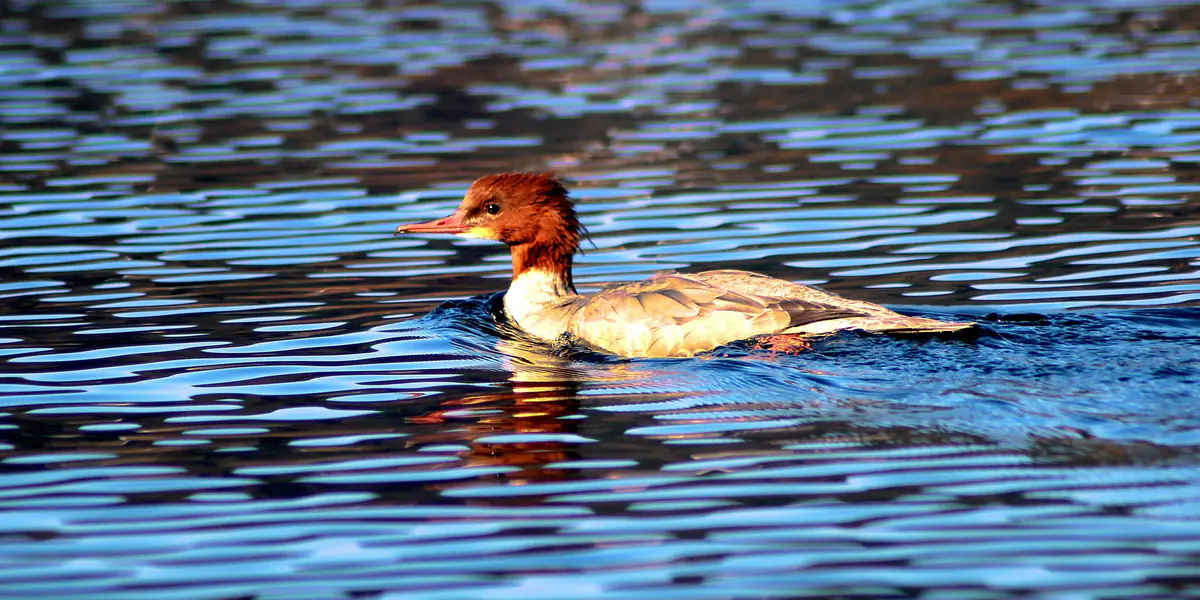
You swim at the lake on a warm afternoon, and by evening your legs are covered in small, very itchy red spots. That is almost certainly swimmer’s itch, known to doctors as cercarial dermatitis. It is common, harmless in the long run and miserable for a few days.
What causes it
The culprit is a group of tiny parasites whose real hosts are water birds, such as ducks, geese, gulls and swans, and some mammals such as muskrats and raccoons. Their life cycle runs through the lake:
- Parasite eggs reach the water in the droppings of an infected bird or mammal.
- The larvae that hatch infect certain aquatic snails.
- The snails release a second, free-swimming larva, the cercaria, which looks for a bird to burrow into.
When a cercaria finds a person instead, it burrows into the skin but cannot go further, because people are the wrong host. It dies there, and the rash is the body’s allergic reaction to it.
Symptoms
- Tingling, burning or itching of the skin, from minutes to days after swimming.
- Small reddish pimples within about 12 hours, which may turn into small blisters.
- The rash is on skin that was in the water; skin covered by a snug swimsuit is often spared.
- Each new exposure tends to bring a stronger, faster reaction.
The CDC says the itching can last up to a week or more and fades on its own. Scratching can lead to a bacterial infection, which is the main thing to avoid.
Where and when it is worst
Cercariae are most common in warm, shallow water near the shore, which is exactly where children play. They live only about a day after leaving the snail. Cases peak in summer, and some lakes and some beaches have it far more than others, depending on the birds and snails there. Wind blowing onshore can push the larvae toward a beach.
How to lower the risk
- Skip beaches with swimmer’s itch warnings, and ask locally: lake associations and beach staff usually know where it is a problem.
- Stay out of marshy, weedy shallows where snails are common; swim off a dock or boat in deeper water when you can.
- Towel off hard or shower right after leaving the water. Children get it most, partly because they stay in the shallows and rarely dry off.
- Don’t feed ducks and geese where people swim; it keeps the birds, and the parasites, at the beach.
Treating the itch
Most cases don’t need a doctor. The CDC lists corticosteroid cream, cool compresses, baths with Epsom salts, baking soda or colloidal oatmeal, a paste of baking soda and water, and anti-itch lotion. Try not to scratch. If the itching is severe, a doctor can prescribe something stronger.
Before you swim
Each lake’s swimming page on Lake by Lake shows the water temperature, the latest algae readings and the beaches and swim areas around the lake. Swimmer’s itch is not tracked by any national program, so local signs and the lake association are the best guide. If the water itself looks green and scummy, that is a different problem: see blue-green algae in lakes.
Questions
Is swimmer's itch contagious?
No. It does not spread from person to person. It is an allergic reaction to tiny parasite larvae that burrow into the skin and die there.
How long does swimmer's itch last?
The CDC says the itching can last up to a week or more but fades gradually. Small red spots usually appear within 12 hours of swimming and can turn into small blisters.
Can you get swimmer's itch in a pool?
Not in a well-kept, chlorinated pool. The parasites live in lakes, ponds and the ocean, where their snail hosts live.
Is swimmer's itch the same as an algae rash?
No. Swimmer's itch comes from parasites and shows up as itchy red spots on skin that was in the water. Blue-green algae blooms can also irritate the skin, but they are a different problem, with green scum or discolored water you can see.